Buying before it is built
Seven stages, and the two that actually slip.
Buying a house that does not exist yet is a different transaction from buying one that does. Here is the whole sequence, with the parts nobody enjoys explaining left in.
-
01
Orientation
Half a day
We walk the plot together at the hour you would actually use it. Light, wind and noise are the three things drawings cannot tell you, and all three change completely between morning and evening on this coast.
-
02
Architect
Two to six weeks
You are buying a design as much as a house. I introduce you to the practice holding the plot and you meet them before you commit to anything. If the fit is wrong, that is worth finding out in week two.
-
03
Design development
Three to five months
Plans, sections and a material palette. This is where a new build diverges from a resale: you can still move a wall, and moving it now costs a drawing revision rather than a demolition crew.
-
04
Coastal review
Four to nine months
Anything inside the shoreline setback goes to coastal review. I keep the schedule honest about this stage because it is the one that most often slips, and no builder can promise around it.
-
05
Groundworks
Two to four months
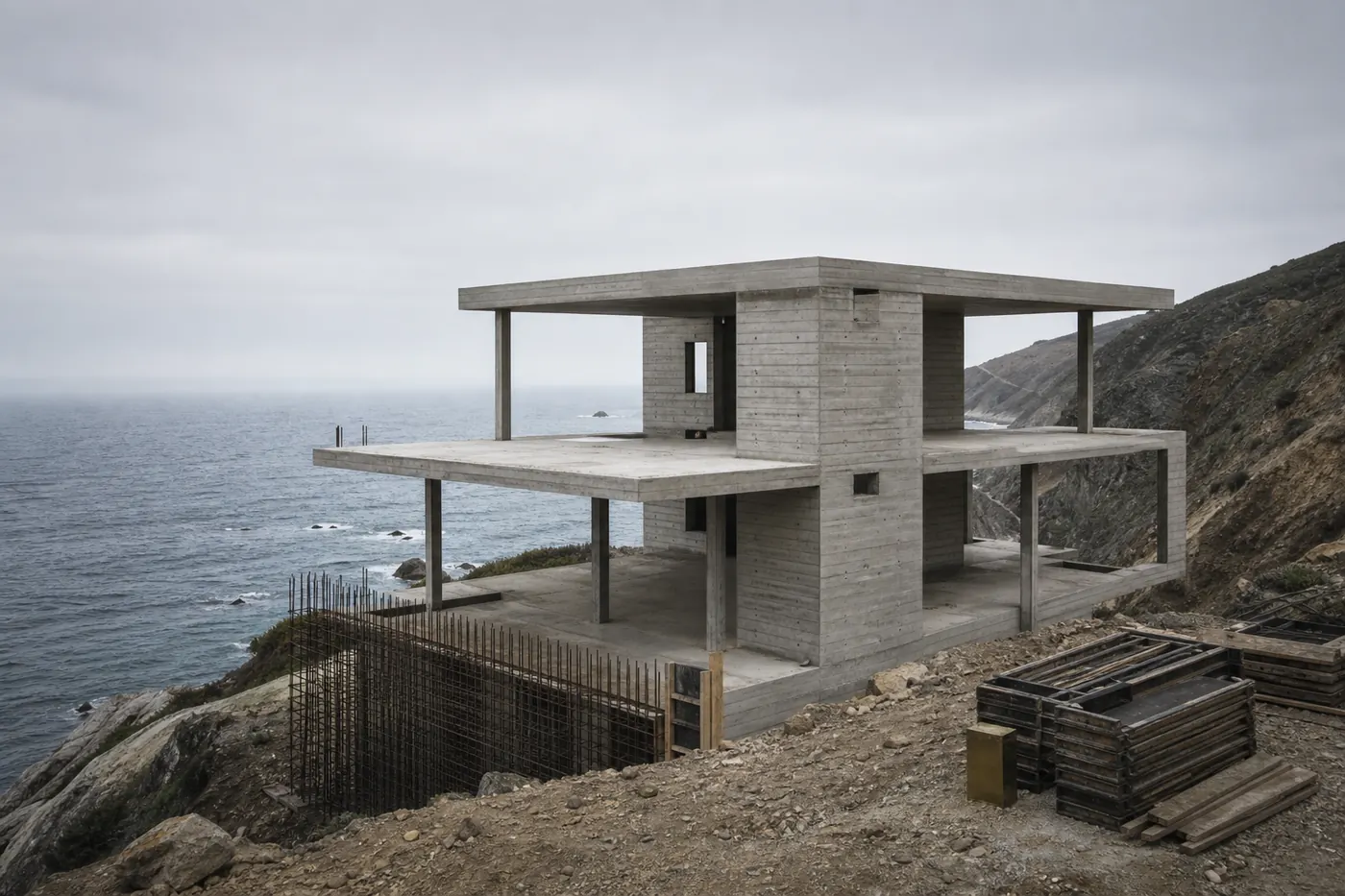
Excavation, rock anchors and the raft. On a cliff plot this is the expensive, invisible half of the build, and the part most worth understanding before you sign.
-
06
Frame and envelope
Six to ten months
Concrete, then glazing, then the roof build-up. Once the envelope closes the programme becomes predictable again, and you can plan a move date with some confidence.
-
07
Handover
One week
A full snagging walk with the contractor and the architect present, then keys, warranties and the as-built drawing set. I hold the drawings for you, because in fifteen years you will want them.
Questions
What buyers ask, and what I actually answer.
Can I still change the design?
It depends which stage the plot has reached. Before coastal review is submitted, most internal walls are still movable and material choices are entirely open. After submission, changes to the envelope mean resubmitting, which typically adds four to six months. I will always tell you which side of that line a plot sits on before you offer.
What does completion date actually mean?
It means the date the contractor is currently working to, not a date anyone can guarantee. On this coast the two reliable causes of delay are coastal review and winter groundworks. I quote the contractor's programme and tell you separately what I think is realistic.
Are the renderings what gets built?
The renderings show the design as drawn, which is why the drawings are published alongside them. Where a material is still open, it says so on the release page. If something shown has not been specified yet, I would rather you know that before viewing than after.
Do I need my own architect or surveyor?
You do not need your own architect, since the plot comes with one. You should have your own structural surveyor review the groundworks package, particularly on the cliff plots. I can suggest three; I do not take a referral fee from any of them.
How does payment work on a new build?
Staged, against certified progress rather than against dates. Your solicitor will hold the schedule. The deposit at exchange is the part worth negotiating, and it is more negotiable than most buyers assume.
What happens if the build stops?
Ask this early and in writing. Every plot I represent carries either a completion bond or a step-in agreement, and the release page states which. If a plot had neither, I would not list it.
Still deciding whether this suits you?
A twenty-minute call is usually enough to work out whether buying off-plan on this coast is right for you. Sometimes the answer is no, and that is a fine outcome.